

PCA Pre-Event Track Inspections
The official PNWR form runs through 33 items that must be checked as a part of the PCA Driver Education Pre-Event Technical Inspection.
PCA Pacific Northwest Region - Driver Education Pre-Event Inspections
Porsche Club of America is the largest single-brand car club in the world. Our local chapter, the Pacific Northwest Region (PNWR), is always hosting events ranging from Show & Shine days, to swap meets and track days. Their Driver Education (DE) days are some of the best ways to get out and enjoy your Porsche's performance without getting into wheel-to-wheel racing.
There's one piece of paperwork that has to happen before you ever roll onto the grid for a DE event: the Pre-Event Technical Inspection. Before a car goes out at speed with other drivers on track, someone qualified has confirmed it's in the condition it needs to be in. This inspection is not a full on race tech inspection, but a safety check that everyone needs to have done before they get to the track. One of the trickier parts is that this form is required to be completed within 30 days prior to each event.
What We Actually Check
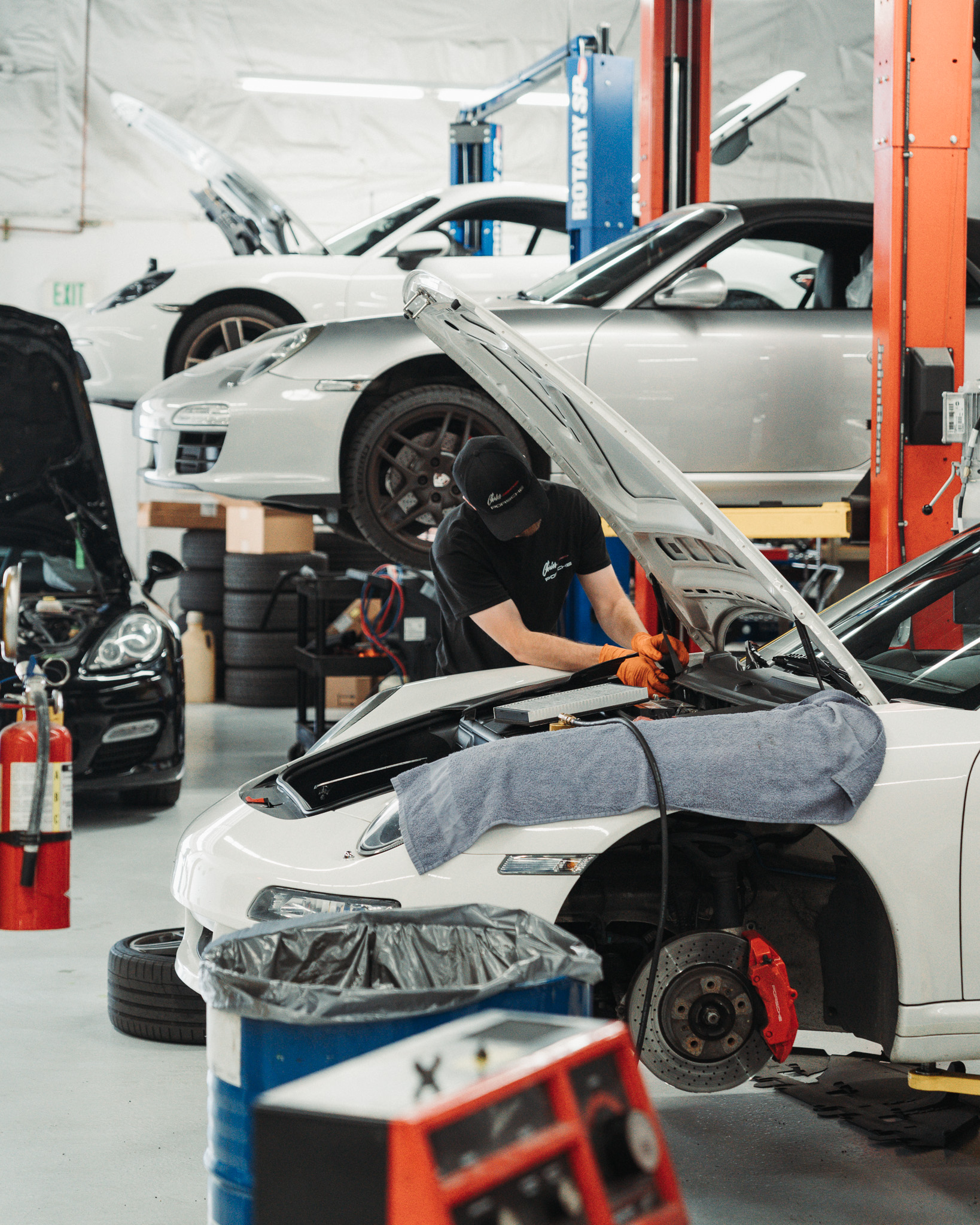
The official PNWR form runs through 33 items, organized loosely by system. We won't walk through all 33 line items, but here's the shape of what we're looking at:
Seats and restraints. Are the seats in good shape and mounted securely? Are the seatbelts factory-provided or SFI/FIA-approved competition harnesses? If a car's running a harness, is there a head-and-neck restraint on hand, and is it within its expiration window? For open cars (Boxsters, Spyders, Targas with the top down) is there a roll bar or cage in place and properly padded anywhere a helmet could make contact with it?
Structure and visibility. No loose body or interior panels, no structural rust near the suspension points, doors that open and close properly from inside and out, a windshield free of cracks or pitting that would affect visibility, at least one securely mounted mirror, and car numbers that are tall enough and contrast properly against the body.
Fluids and leaks. A gas cap that closes tight, no leaks of any fluid anywhere on the car, and fluid lines that are properly routed and fitted and no external clamps on pressurized oil lines.
Electrical and drivetrain. Battery and wiring secured with no corrosion or chafing, a throttle that returns freely, an engine and accessories in good condition with the exhaust securely fastened, and drive belts that are in good shape and properly tensioned.
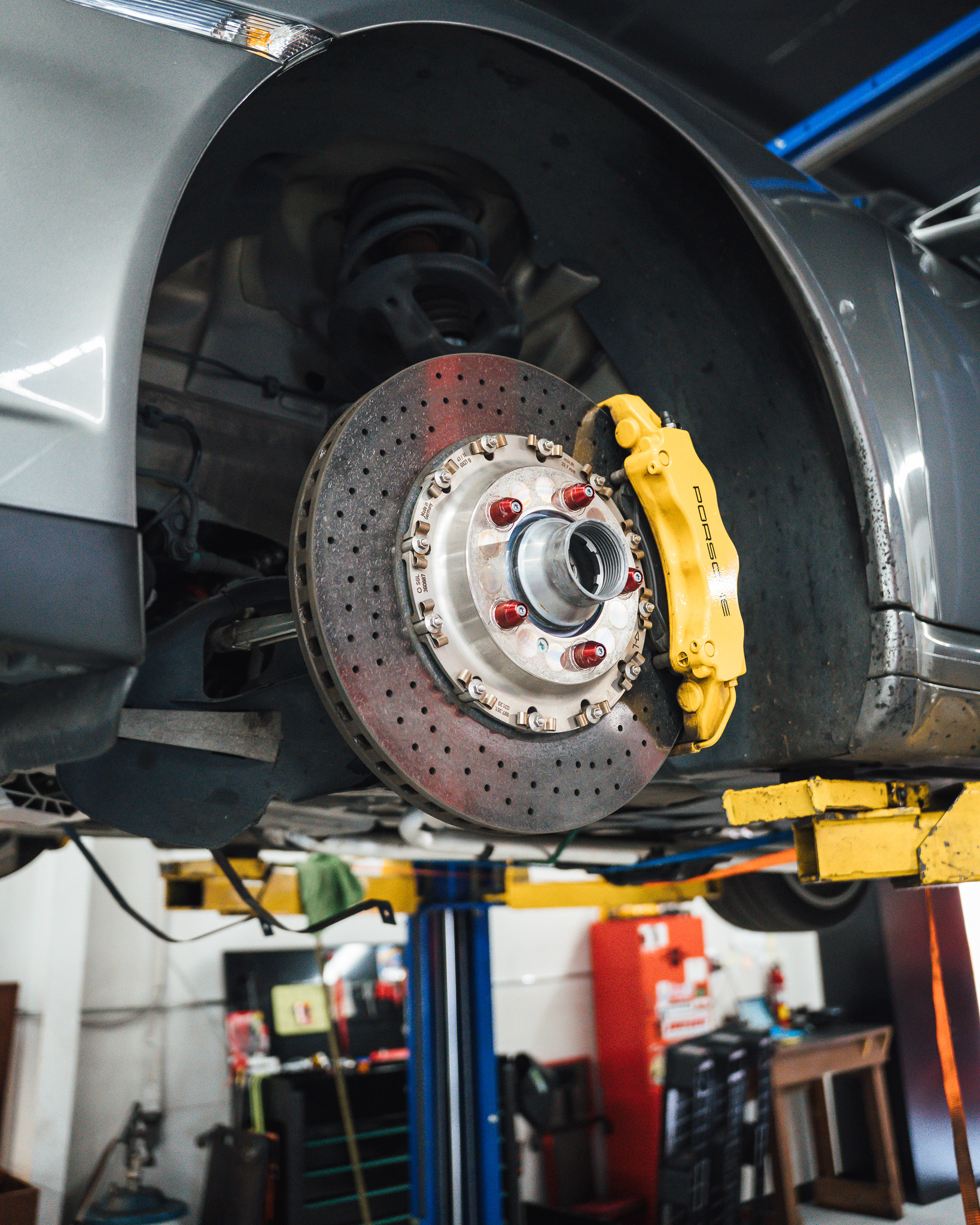
Brakes, wheels, and suspension. This is where a lot of the real work happens because speed on track is the easy part. Stopping and slowing on track is even more important. Rotor condition, pad thickness over 50%, brake fluid that's fresh and at the right level, wheels free of cracks or damage, lug or center-lock fasteners fully engaged and properly torqued, wheel bearings with no play, tires with adequate tread and correct cold pressures, and front and rear suspension components - ball joints, tie rods, sway bar links, axle boots - all secure and in good condition.
The Paperwork Side
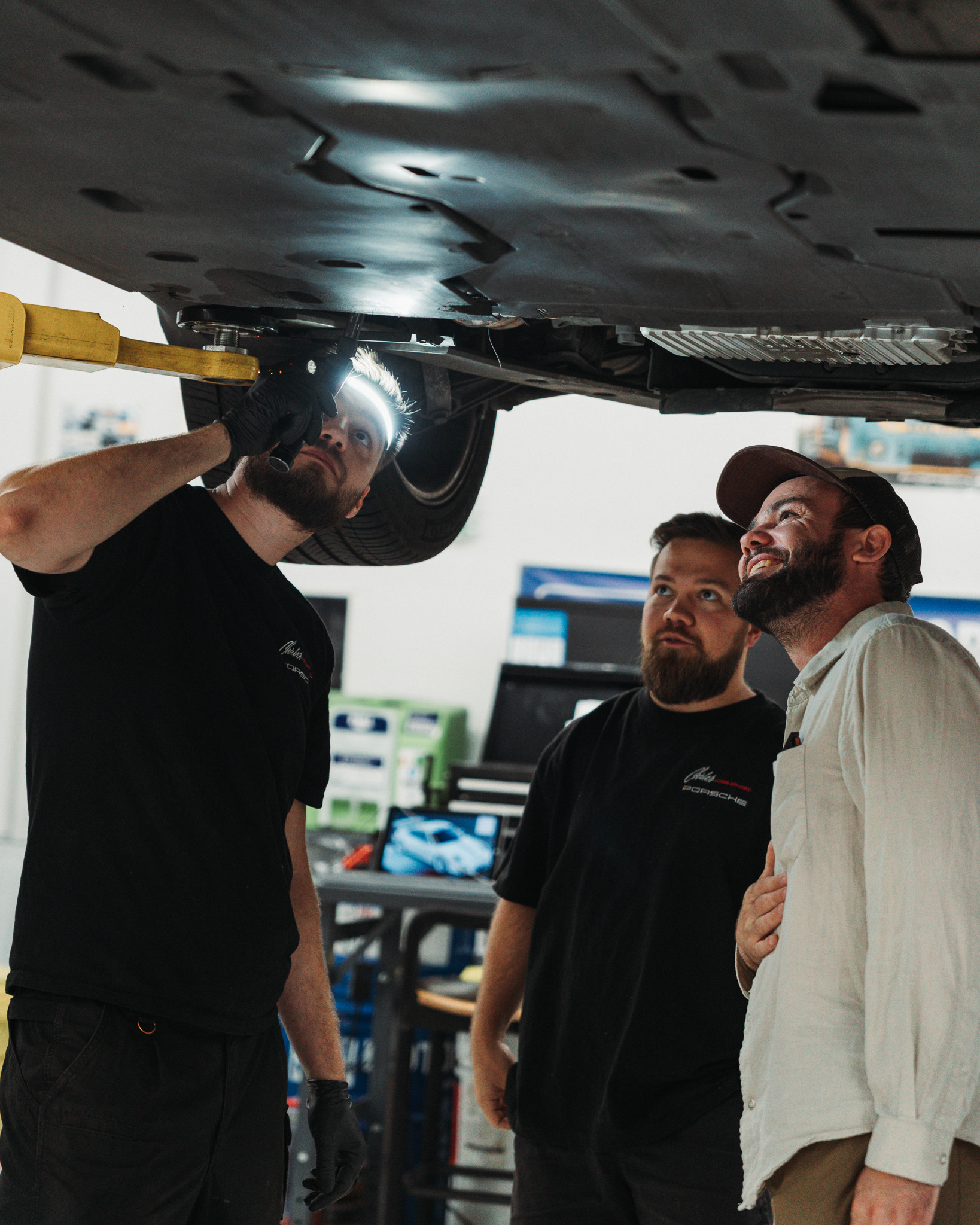
We'll complete the official paperwork and document every aspect of what find. Attentional we also digitally document everything with photos and videos that are sent to you - so that you, the owner, know exactly what the conditions are. The box on the paperwork gets checked, but you also get those pictures so you are up to speed on the exact conditions as well.
Why Get It Done at a Specialist Shop
We've been doing this a long time, and we'd rather catch something small in our shop than have it turn into something bigger at 100 miles an hour. If we find anything that would be a concern or cause the car to not pass this pre-event inspection, it's the perfect opportunity to have us go ahead and compete the repair or service that is needed.
Ready to schedule your pre-event technical inspection? Book an appointment or give us a call at (425) 462-9296.